
Quick verdict
Pick a jump starter if you often drive alone, park where help is far away, or live with an electric car that can’t give a jump. Pick jumper cables if a second gas car is always close and you want a backup that never needs charging.
The jump starter vs jumper cables question comes down to one trade. Cables need a second car with a healthy battery that is allowed to give power, and someone to drive it over. A jump starter needs nothing but its own charge, and that charge is the thing you have to look after.
Most drivers who ask me about this own neither and want to buy one roadside tool for the trunk. My answer for most of them is a pack, but there are real situations where cables are the better buy, and a couple where only one of them will work at all. If you already know you want a pack, my best jump starter guide sizes one to your engine, and the rest of my emergency kit is in the roadside and emergency section.
Jump Starter vs Jumper Cables at a Glance
Option 1
Jump Starter
A charged lithium pack with its own clamps that starts the car without a second vehicle.
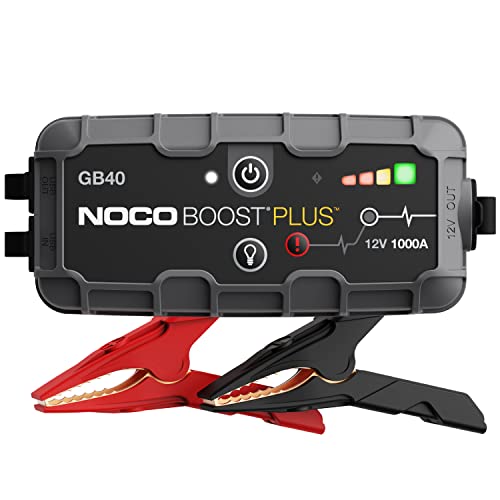
My pick: NOCO Boost GB40
Option 2
Jumper Cables
Two heavy cables that borrow power from a running donor vehicle.
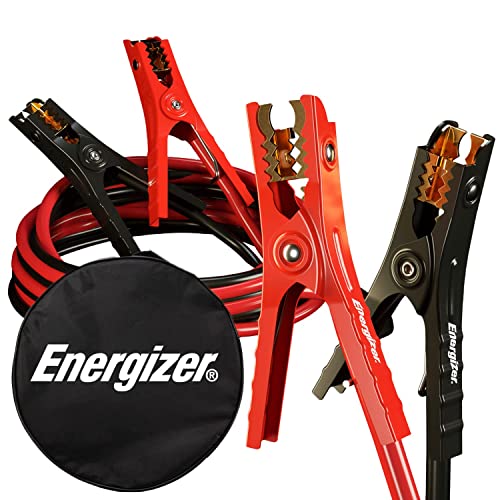
My pick: Energizer 4-Gauge 16-Foot Jumper Cables
| Factor | Jump starter (NOCO GB40) | Jumper cables (Energizer 4-gauge) |
|---|---|---|
| Needs a second vehicle | No | Yes, one that is allowed to give a jump |
| Needs charging | Yes, before winter and after use | Never |
| Storage temperature (maker) | -4 to 122°F | Flexible down to -40°C (-40°F) |
| Protection if clamped wrong | Spark-proof, reverse polarity | None; order matters |
| Reach | Short leads, pack sits by the battery | 16 feet between the two cars |
| Rated engines | 6.0L gas, 3.0L diesel | Depends on the donor’s battery |
What a Jump Starter Is
A jump starter is a portable battery, usually lithium today, with a pair of short clamps. You connect it to the dead battery, switch it on and start the car; the pack supplies a short, strong burst and the car’s alternator takes over once the engine runs. The NOCO Boost GB40 is rated for gas engines up to 6.0 liters and diesels up to 3.0 liters, with up to 20 starts per charge.
What a jump starter can’t do is work flat. It slowly loses charge in storage, faster in heat, and it delivers less in deep cold. The GB40’s rated storage range is -4°F to 122°F, it should only be charged between 32°F and 104°F, and NOCO’s manual limits use to five attempts in 15 minutes before the pack rests. It also isn’t a charger: it starts the engine, it doesn’t refill the battery.
What Jumper Cables Are
Jumper cables are two insulated cables with clamps at each end that connect a dead battery to a donor vehicle’s battery. They have no battery of their own, so they never go flat and can sit in a trunk for years. The Energizer set here is 4 gauge and 16 feet long, which reaches between two cars parked nose to nose or side by side.
Cables can only pass on what the donor has, and they rely on you to connect them in the right order. Ram’s 2025 heavy-duty manual spells out the routine: start the donor vehicle and let it idle a few minutes before you try the dead one, put the last black clamp on bare engine metal away from the battery, and keep the two vehicles from touching. Not every car can be a donor, either: Tesla’s Model 3 manual says it cannot be used to jump start another vehicle.
Head to Head
The scoreboard looks even, but the categories don’t weigh the same for everyone. Independence matters every time you are alone; heat only matters if the car bakes outside for months.
Which One Fits Your Situation
This is the table I’d use to decide. Each answer rests on a maker’s rule, not on which tool sounds more modern.
| Your situation | Better pick | Why |
|---|---|---|
| You often drive alone, early or late | Jump starter | No donor needed, and no stranger’s car beside yours |
| The other car at home is a Tesla or another EV | Jump starter | Tesla’s Model 3 manual says it cannot be used to jump another vehicle, so cables would leave you waiting for a gas car |
| Two gas cars in the driveway | Jumper cables | The donor is always there; start it and let it idle a few minutes first, as Ram’s manual says |
| Car parked outside all summer in a hot state | Jumper cables, or a pack kept indoors | Parked cabins average 116°F after an hour in the sun (ASU), close to the GB40’s 122°F storage limit |
| Car stored all winter | Jump starter, charged indoors | Charge it inside (the GB40 charges only above 32°F), then bring it out on start-up day |
| Diesel pickup or big V8 | Both | A pack rated for the engine, plus 4 gauge or thicker cables for a strong donor |
| Long road trips or remote areas | Both | The pack gets you going alone; cables are the fallback if it is flat |
If you do buy cables, buy enough of them: I’d want at least 16 feet so the cars don’t need to park bumper to bumper, and 4 gauge or thicker (a lower gauge number means thicker wire). Check the listing for the conductor, too. Many popular sets, the Energizer included, use copper-clad aluminum, which carries less current than solid copper of the same gauge, so go thicker if your car or truck is large.
Which One Do You Need?
Pick a Jump Starter If
- You often drive alone or at night
- Your other household car is an EV
- You want protection against a wrong hookup
- You can charge it a few times a year
Pick Jumper Cables If
- A second gas car is nearly always close
- Your car sits outside through hot summers
- You want a backup that never goes flat
- You know the clamp order by heart
Get both if you drive a diesel, tow, or cover long empty stretches. Cables are cheap insurance against the one morning the pack turns out to be flat.
Jump Starter and Jumper Cable Questions
Are Jump Starters Better Than Jumper Cables?
For most drivers, a jump starter is better than jumper cables because it doesn’t need a second vehicle and protects against a wrong hookup. Cables still win on price, on storage in a hot car and on never needing a charge. If a gas donor is always nearby, cables are a perfectly good choice.
Can You Use Jumper Cables on an Electric Car?
You can sometimes use jumper cables to give an EV’s 12-volt battery a boost, following that car’s manual, but many EVs must not be used as the donor. Tesla’s Model 3 manual says it cannot be used to jump start another vehicle and that trying can cause damage. A portable jump starter avoids the question, and Tesla’s manual covers using one on its own 12-volt battery.
Are Booster Cables and Jumper Cables the Same Thing?
Yes, booster cables and jumper cables are the same thing: two insulated cables with clamps that connect a dead battery to a donor battery. “Booster” is simply another name for them. A “battery booster” on its own, though, usually means a portable jump starter pack.
How Do You Choose Jumper Cables?
Choose jumper cables by thickness, length and conductor. I’d buy 4 gauge or thicker (lower numbers are thicker), at least 16 feet long, with clamps that grip firmly. Copper-clad aluminum cables are common and fine for cars, but go a size thicker for trucks, and for diesels look at 1 or 2 gauge.
Are Portable Jump Starters Any Good?
Portable jump starters are good, as long as you buy one rated for your engine and fuel and keep it charged. Brand-name packs with spark-proof clamps, like the NOCO GB40, are the ones I trust. Cheap packs with huge peak amp numbers and no engine rating are the ones that disappoint. My guide on how to use a jump starter covers the steps.
Verdict
A jump starter is the better single purchase for most drivers: it works when you are alone, and it won’t spark if you clamp it wrong. Jumper cables are the better buy for a two-car gas household, a car that bakes outside all summer, or anyone who wants a tool that never needs charging. Diesel owners should carry both and size the pack properly with my best jump starter for diesel picks. And whichever you choose, a car that needs a jump more than once is asking for attention: test the battery, and replace it with the right battery for your car if it fails.